

Cristiano Ronaldo scored as Portugal came from behind to beat Croatia 2–1 and reach the World Cup Round of 16, in a match shaped by VAR, late pressure, and a final meeting with Luka Modrić.
Portugal’s 2–1 win over Croatia was not a match that followed a clean, predictable script. It was full of moments that appeared to change everything, only to be pulled back by the offside flag or a VAR review. Croatia scored first, Portugal had a Ronaldo goal ruled out, Croatia had multiple goals disallowed, and the decisive moment arrived only in the fourth minute of stoppage time.
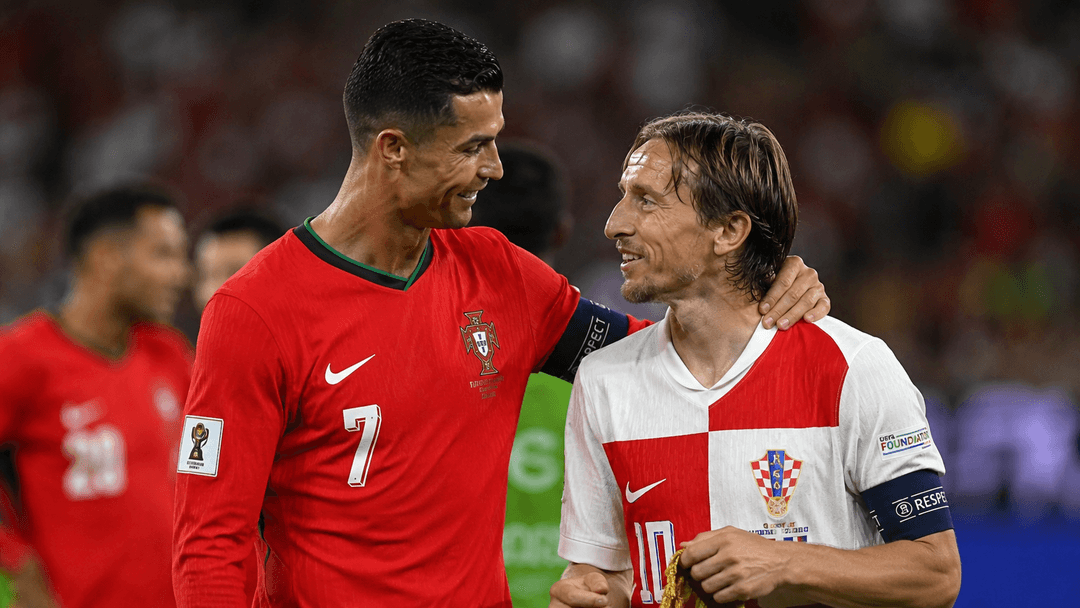
By the end, Portugal were through to the Round of 16 and Croatia were out. Cristiano Ronaldo had scored from the penalty spot and been named player of the match. But the game was also about something larger than one result: it may have been the final international meeting between Ronaldo and Luka Modrić, two players whose careers were closely connected long before they faced each other in Toronto.
The first half finished goalless, but Croatia started the second period with far more urgency. Ivan Perišić opened the scoring in the 53rd minute, giving Croatia a lead that briefly made Portugal look vulnerable again after their uneven group stage.
Three minutes later, Croatia thought they had doubled the advantage, but the goal was ruled out for offside. That was the first of several decisions that changed the emotional direction of the game. Portugal then hit back through Rafael Leão, whose long-range effort struck the crossbar, before Ronaldo appeared to equalise in the 61st minute. His goal was also ruled out for offside.
For a while, it looked as though Portugal were running out of time and ideas. Ronaldo had only one touch inside Croatia’s penalty area during the entire match. It happened to be the most important one.
In the 68th minute, Portugal were awarded a penalty after Nikola Vlašić fouled Renato Veiga during a corner. Ronaldo stepped up and converted calmly to make it 1–1.
The match then became even more chaotic:
Portugal had survived a match where almost every major moment came with a second question: did it really count?
Ronaldo’s performance was not built around constant involvement. He did not dominate possession, create a long list of chances, or spend the match receiving the ball in dangerous areas. Croatia managed to keep him away from the penalty box for long stretches.
Yet one key detail explains why he is still so difficult to ignore: when Portugal finally got a high-pressure chance, he took it.
The penalty was Ronaldo’s first goal in a World Cup knockout match. At 41, he is no longer Portugal’s most mobile attacker, and he cannot be expected to lead every transition or press every defender. But he still carries a different kind of value. He attracts attention, gives Portugal a clear target in tense moments, and remains one of the players most trusted when a match becomes emotionally difficult.
Portugal’s win also showed why they cannot rely on him alone. Leão created the winning goal. Ramos finished it. Renato Veiga won the penalty. Portugal’s best version is not a team waiting for Ronaldo to rescue it, but a team that creates enough movement around him for Ronaldo’s experience to become decisive when the opportunity appears.
The match also had a quieter emotional side. Luka Modrić started for Croatia and played the full match in what became his final appearance for the national team. Ronaldo began for Portugal and was replaced late in the second half, shortly before the decisive goal.
For six seasons at Real Madrid, they were central parts of the same team. Modrić controlled the rhythm from midfield, while Ronaldo turned that control into goals. They shared the dressing room from 2012 to 2018, won four Champions League titles together, and helped build one of the most successful periods in Real Madrid’s modern history.
Their styles were always different. Ronaldo was the final action: the run, the shot, the goal, the moment everyone remembers. Modrić was often the player who made those moments possible earlier in the move, finding space, escaping pressure, and moving the ball into the areas where attackers could hurt opponents.
That is why their meeting in Toronto felt bigger than a normal knockout tie. It was not just Portugal against Croatia. It was two players from the same great club era, now carrying different national teams in what may be the final stage of their international careers.
Portugal will meet Spain in the Round of 16 after Spain’s 3–0 win over Austria. Croatia gave Portugal a warning: against organised opponents, they can struggle to create clean chances and may need patience before the opening appears.
Spain are likely to make that problem even harder. Portugal will need more control in midfield, quicker support around Ronaldo, and better use of wide areas through Leão and the full-backs. They cannot spend long periods waiting for a penalty or a late cross.
The key areas to watch against Spain will be:
Portugal have already shown several versions of themselves at this World Cup. They were too passive against DR Congo, ruthless against Uzbekistan, cautious against Colombia, and resilient against Croatia. The Spain match may finally show which version is closest to the team they really are.
The Croatia game was decided by details: one penalty, one late cross, several offside decisions, and a team that kept believing after earlier chances disappeared. It was a reminder that knockout football is rarely only about who has more possession or more shots. It often comes down to who reacts best after a setback and who stays clear-headed when the match changes direction.
That is part of why football decision-making is so important. The pass before the cross, the movement before the penalty, the awareness to hold a run by half a second — those small moments shape the big highlights.
Brain1 can be used as a short reaction and attention warm-up before training or a match. It cannot recreate a World Cup penalty or a 90th-minute cross, but it can help players practise the focus and fast recognition that sit behind those moments, link to app platform.brain1.com
Portugal are through. Ronaldo scored. Modrić leaves the international stage. And now Portugal move on to Spain, where there will be much less room for error.