

Spain beat Portugal 1–0 with a stoppage-time goal from Mikel Merino, ending Cristiano Ronaldo’s World Cup campaign and exposing how small moments decided Portugal’s tournament.
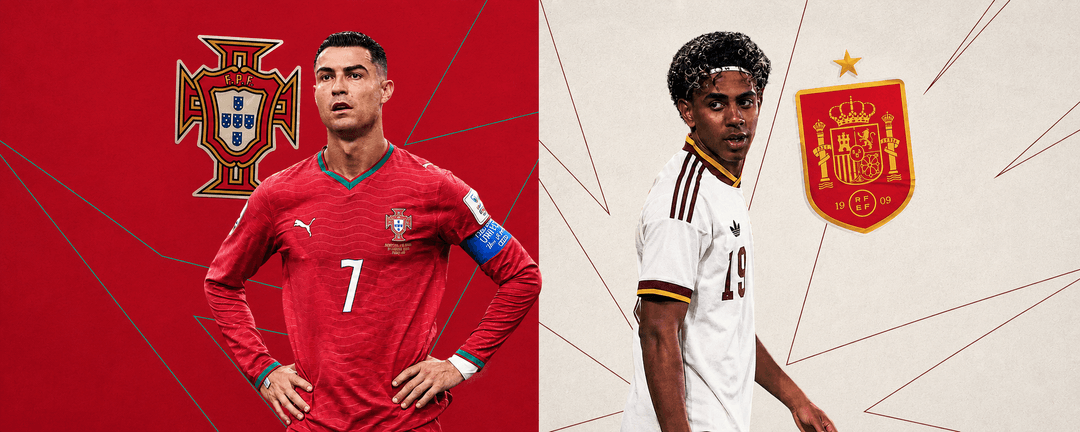
Portugal’s World Cup ended in the smallest possible margin.
For more than 90 minutes, Spain and Portugal played a match that looked like it might be remembered for missed chances, goalkeeping saves, and the tension of two teams refusing to give the other a clear opening. Then, in the first minute of stoppage time, Mikel Merino received Ferran Torres’ pass near the edge of the box and placed his shot into the near corner. Spain were through to the quarter-finals. Portugal were out.
The 1–0 result felt harsh because Portugal had their moments. Cristiano Ronaldo tested Unai Simón early. João Félix created danger at the far post. Nuno Mendes hit the crossbar after a deflection. Diogo Costa made several important saves to keep Portugal level in the first half. But knockout football rarely rewards the team that was close more often. It rewards the team that takes one decisive moment better than the other.
For Portugal, that was the story of the match and, in some ways, the story of the tournament.
Spain started quickly and could have scored inside the first ten minutes when Dani Olmo sent Mikel Oyarzabal through on goal. Oyarzabal missed the target, but the move set the tone: Spain were willing to play forward early and ask Portugal’s defence to make decisions under pressure.
Portugal responded through Ronaldo, who struck from the right side of the box in the 12th minute. Simón saved and pushed the shot away for a corner. It was Ronaldo’s clearest early moment and a reminder that, even at 41, he still needed only one small opening to become dangerous.
The first half then became a sequence of narrow escapes. Diogo Costa denied Lamine Yamal and Álex Baena in quick succession. Dani Olmo missed after another Spanish chance. Portugal nearly took the lead when Nuno Mendes’ shot deflected off Pedro Porro and bounced onto the crossbar.
Neither team dominated the entire half, but Spain created the more dangerous passages. Portugal stayed alive because their goalkeeper and defensive structure held firm.
The match shifted after the break when Nuno Mendes was forced off in the 56th minute. Until then, he had been one of Portugal’s most important players, especially in the way he dealt with Yamal on the left side.
Mendes had also given Portugal an attacking outlet. He was willing to carry the ball forward, overlap into space, and make Spain’s right side defend deeper than it wanted to. Once he left the field, Portugal lost more than a defender. They lost a player who connected their back line to the attack.
That made Portugal’s job harder for the final half-hour. Spain began to find more room in wide areas and had more control over the rhythm of the match. Portugal still had enough quality to threaten, but the game slowly moved toward Spain’s preferred shape: patient possession, fewer open transitions, and one late opportunity created by sustained pressure.
The decisive moment came in stoppage time. Ferran Torres found Merino near the edge of the box, and Portugal could not close the space quickly enough. Merino’s finish was not spectacular, but it was precise. In a match full of almost-moments, Spain produced the one action that did not need another chance.
Ronaldo had already given Portugal important moments in this tournament. He scored twice against Uzbekistan, converted the penalty against Croatia, and continued to carry the attention of every opposition defence. Even when he was not scoring, defenders still reacted to his runs, his movement in the box, and the possibility that Portugal would look for him in the biggest moment.
Against Spain, though, Portugal struggled to create enough clear situations around him.
Ronaldo had chances. He had the early shot saved by Simón and another attempt after João Félix headed the ball back across goal. But Portugal could not consistently get the ball to him in the areas where he is most dangerous. Spain kept the spaces around the penalty area crowded and made every Portuguese attack take one extra touch or one extra pass.
That does not mean Ronaldo was the reason Portugal lost. It showed something more important: Portugal are at their best when Ronaldo is part of a wider attacking structure, not the only final target. Against Uzbekistan, that structure worked. Bruno Fernandes found runners early, wide players created space, and Ronaldo arrived in finishing positions. Against Spain, Portugal’s best moments were more isolated.
The tournament reinforced the challenge we wrote about earlier in “Cristiano Ronaldo’s Final World Cup: Four Challenges That Could Define Portugal’s Tournament.” Portugal needed Ronaldo to remain decisive without becoming predictable. In the end, they showed both sides of that equation.
Portugal did not lose because they were dramatically outplayed. They lost because Spain handled the margins better in the final phase of the game.
The key details were:
That is what makes knockout football difficult. A team can defend well for long periods, create a few chances, and still leave with nothing because one small lapse arrives at the wrong time.
Portugal’s World Cup campaign was uneven but not empty. They drew with DR Congo, overwhelmed Uzbekistan, survived Croatia in dramatic fashion, and pushed Spain deep into stoppage time. There were games where they looked sharp and dangerous, and there were games where they struggled to make their possession matter.
The bigger question now is what Portugal build after this tournament.
Ronaldo’s role will naturally become part of that conversation, but the next phase cannot be only about replacing him. Portugal have enough quality across the squad to remain competitive. The task is to create a more consistent identity: a team that can use wide areas well, connect midfield and attack faster, and stay dangerous even when the opponent takes away the obvious route to goal.
Spain exposed the difference between having individual moments and having a sustained attacking rhythm. Portugal had the first. Spain found the second.
Merino’s winner came from a very small delay in Portugal’s reaction. In matches like this, the difference is often not a huge tactical mistake. It is one player receiving the ball half a second too freely, one defender arriving a step late, or one midfielder not recognising the next pass quickly enough.
That is why attention and decision-making matter so much in tight knockout games. Players have less time to scan, adjust their body position, and decide whether to press, hold, pass, or cover space. The best teams do not always have more time. They simply use the time they have more clearly.
Brain1 can be used as a short cognitive warm-up for reaction, attention, and quick decision-making before training or a match. It will not recreate the pressure of a World Cup Round of 16, but it can help players practise the mental habits that appear in the moments before the final pass or shot, link to the app: platform.brain1.com
Portugal leave the tournament after one late goal. Spain move on to the quarter-finals. And for Ronaldo, the World Cup did not end with a final record or a dramatic winner, but with the same thing that defines so many knockout matches: one moment arriving too late to stop.