

Portugal reached the 2026 World Cup knockout stage after a 0–0 draw with Colombia, but the match raised questions about attacking rhythm, Ronaldo’s role, and what the team must improve next.
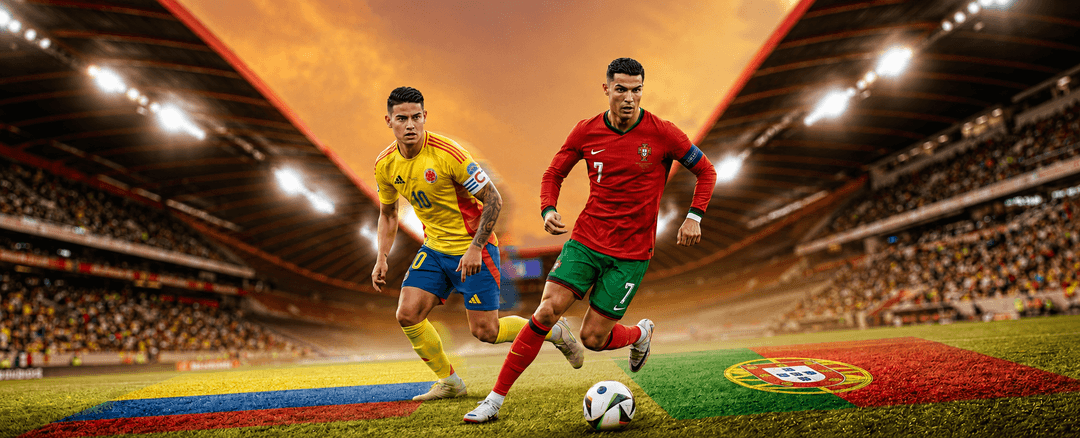
Portugal are through to the knockout stage of the 2026 World Cup, but their final group match against Colombia did not feel like a celebration. The 0–0 draw in Miami secured second place in Group K, with Portugal finishing on five points behind Colombia’s seven. DR Congo also advanced from third place, while Uzbekistan left the tournament without a point.
On paper, Portugal achieved the basic objective. They avoided defeat, reached the Round of 32, and kept a clean sheet against the strongest team in their group. But the match also showed why the next stage of the tournament will be much less forgiving. Colombia had more control over the attacking side of the game, finishing with 24 shots and six attempts on target compared with Portugal’s 13 shots and two on target.
Portugal survived the pressure, but they did not create enough to make the result feel fully convincing.
Portugal’s 5–0 win over Uzbekistan created a completely different mood around the team. Cristiano Ronaldo scored twice, Portugal attacked with more speed, and several players contributed in the final third. Bruno Fernandes found runners early, wide players delivered the ball into dangerous areas, and the team looked much more direct than it had in the opening draw against DR Congo.
Against Colombia, that rhythm was harder to find.
Portugal had less space, fewer clean transitions, and fewer moments where Ronaldo could receive the ball in a real finishing position. Colombia’s pressure forced Portugal to spend more time defending and managing possession rather than building attacks with the same confidence they showed against Uzbekistan.
That is not necessarily a failure. Good tournament teams need to know how to survive difficult matches. But Portugal will need more than survival when the knockout rounds begin.
Ronaldo started and completed the full 90 minutes against Colombia. At 41, that alone says something about his importance to Portugal’s plans. He remains the player opponents pay most attention to inside the penalty area, and even when he is not scoring, defenders still react to his movement.
However, the Colombia match showed that Portugal cannot rely on Ronaldo only as a final-touch player.
In our earlier article, “Cristiano Ronaldo’s Final World Cup: Four Challenges That Could Define Portugal’s Tournament,” one of the main questions was whether Portugal could build a system around Ronaldo without becoming too predictable. That question is now even more relevant.
Against stronger opposition, Ronaldo may not get many touches near goal. Portugal need to create situations where he can arrive late, attack the near post, pull defenders away from other runners, or combine quickly with Bruno Fernandes and the wide players. His influence may become less about dominating the game and more about making the right movement at the right moment.
That is often the difference between an experienced striker still being dangerous and an experienced striker becoming isolated.
Portugal have already shown two very different versions of themselves in this group stage. Against Uzbekistan, they looked sharp and confident. Against Colombia, they looked more cautious and less effective in the final third.
Before the knockout stage, the main priorities are clear:
The next opponent will almost certainly give Portugal less time on the ball than Uzbekistan did. That means decision-making will become even more important. The first touch, the early scan, the pass made one second earlier, and the choice not to force a difficult shot can decide whether a team creates a chance or loses possession.
The positive side of the Colombia draw is that Portugal did not collapse under pressure. Colombia created more shots and tested Portugal’s defence, but they still could not find a goal. In a tournament, that ability to stay organised during a difficult spell can be as valuable as a convincing win.
Portugal do not need to dominate every knockout match. They need to remain calm when the game turns messy, take their chances when they come, and avoid making the kind of mistakes that cannot be recovered in one-match elimination football.
The group stage gave them a useful lesson: Portugal are dangerous when they attack quickly and use the space around Ronaldo. But they also need another level of control when the opponent takes that space away.
The Colombia match did not produce a goal, but it still showed how much football depends on attention and decision-making. When space disappears, players have less time to scan, receive the ball, choose the next action, and react after losing possession.
That is where the mental side of the game becomes visible. Brain1 can be used as a short reaction and attention warm-up before training or a match, helping players focus on quick recognition, controlled responses, and staying accurate when the game becomes faster. It does not replace football training, but it can support the habits that matter in tight knockout matches, link to app platform.brain1.com
Portugal are through, but the group stage has not yet answered whether they are ready to challenge for the tournament.
They have Ronaldo scoring records, a five-goal win over Uzbekistan, and enough quality across the squad to hurt strong opponents. They also have a warning from the Colombia match: possession and reputation will not be enough in the knockout stage.
The next match will be less about history and more about execution. Portugal need to turn their attacking talent into clearer chances, give Ronaldo better moments in the box, and show that they can play with both control and urgency when one mistake could end the tournament.
Soft CTA: Try Brain1 before the next World Cup match as a short attention and reaction warm-up, then watch how the best teams make their decisions before the pressure arrives.