

Germany’s 2026 World Cup ended with a penalty shootout loss to Paraguay. The defeat offered a sharp contrast with the calm, controlled team that won the tournament in 2014.
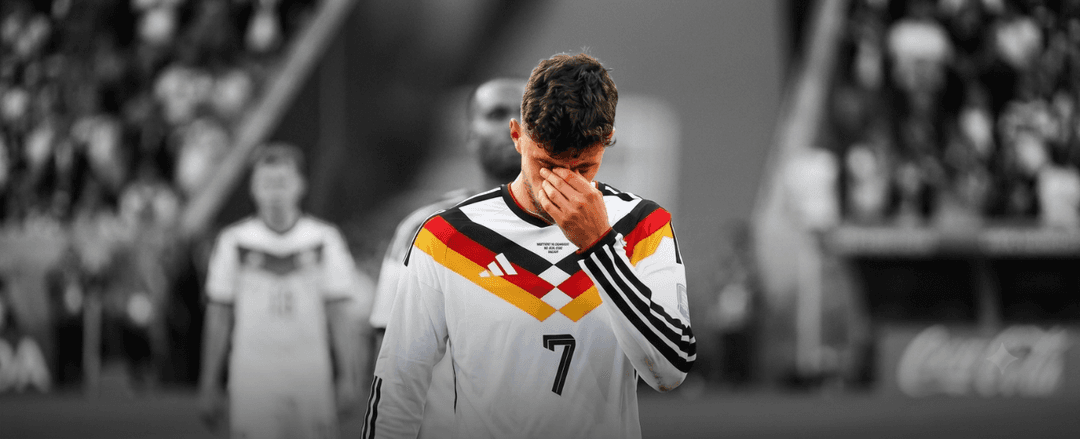
Germany arrived at the 2026 World Cup with enough quality to look like a serious contender again. They had started the tournament with a 7–1 win over Curaçao, followed it with a 2–1 victory against Côte d’Ivoire, and had already shown that their attacking players could create chances quickly when the game opened up.
But against Paraguay, none of that was enough.
Germany were eliminated in the Round of 32 after a 1–1 draw that went through extra time and into penalties. Paraguay won the shootout 4–3 after Kai Havertz, Nick Woltemade and Jonathan Tah all failed to convert. It was a difficult exit not only because Germany lost to a lower-ranked opponent, but because the match exposed a problem that has followed the team for much of this tournament: they could control parts of the game without fully controlling the decisive moments.
For a country that once won the World Cup through patience, structure and ruthless calm, this defeat felt especially striking.
Germany had more of the ball and entered the game as favourites, but Paraguay did not need to dominate the match to create danger. They stayed compact, waited for their moments, and found one just before halftime. In the 42nd minute, Julio Enciso headed in a cross from Matías Galarza to give Paraguay a lead that changed the emotional shape of the game.
Germany responded after the break. Florian Wirtz delivered from the left, and Havertz headed the equaliser into the far corner in the 54th minute. From that point, the match looked like it might follow the expected script: Germany would keep pushing, Paraguay would eventually run out of energy, and the stronger side would find a late winner.
That did not happen.
Germany came close in extra time when Jonathan Tah headed in from a corner, but the goal was ruled out after a VAR review because of a foul on Paraguay goalkeeper Orlando Gil. Instead of getting the breakthrough, Germany were pulled deeper into the kind of match they needed to avoid: tense, slow, physical, and increasingly defined by one mistake.
Germany’s 2014 World Cup-winning team was not perfect in every match, but it had a clear identity. It could dominate possession, but it also knew how to manage difficult periods without losing composure. It had experienced players who understood when to slow the game down, when to take a risk, and when to wait for the right opening rather than force the next attack.
That team did not always look spectacular. It looked controlled.
The 2026 side has many talented players, especially in attacking areas, but this match showed the difference between talent and tournament control. Germany had opportunities, territory, and moments of pressure. What they did not have was the calm final action that separates a difficult win from a painful exit.
The comparison is not about expecting every Germany team to repeat 2014. Winning a World Cup is rare, and no squad can simply recreate that level of experience. But the 2014 team had a habit of making the match feel smaller than the occasion. Against Paraguay, Germany looked like the occasion had become bigger than the match.
Penalty shootouts are often described as lotteries, but that explanation only tells part of the story. Technique matters, of course. So does the goalkeeper. But penalties also test how well players can stay composed when there is no longer any movement around them to hide inside.
The player has the ball, the goalkeeper, the crowd, and a few seconds to make one decision.
Germany missed three penalties:
Paraguay were not perfect either. Antonio Sanabria and Fabián Balbuena missed, but Paraguay found enough control in the decisive moments to move on.
For Germany, the shootout was the final version of what had already happened during the match. There were good passages of play, but the final action did not match the level of the build-up.
Germany’s exit will lead to questions about tactics, selection, and the balance of the squad. But the bigger issue may be how the team handles games that refuse to go according to plan.
Against Paraguay, Germany needed to do more than attack. They needed to recognise when the game had become emotional, when Paraguay were gaining confidence, and when the next decision had to be simpler rather than more ambitious. In knockout football, the best teams are not always the ones that play beautifully for ninety minutes. They are often the teams that remain clear-headed when the match becomes uncomfortable.
Germany will need more of that in the future:
The team has enough talent to improve. Wirtz, Havertz, Woltemade and others can still form an important generation for Germany. But tournament football does not wait for potential to become experience. It tests whether players can make the right choice when the match becomes tense, messy, and unforgiving.
For Paraguay, this was not just a surprise result. It was a performance built on discipline and belief. They had finished third in Group D after losing heavily to the United States, beating Turkey, and drawing with Australia. Few people expected them to eliminate Germany in the first knockout round.
But they stayed in the game, took their first major chance, defended through long periods of pressure, and held their nerve in the shootout. Paraguay will now face the winner of France vs Sweden in the Round of 16.
Germany leave the tournament with a much harder question: how can a team that looked so dangerous in the group stage become so uncertain when one match decides everything?
The difference between Germany’s 2014 success and this 2026 exit was not simply about player quality. It was also about decision-making under pressure. The strongest tournament teams tend to have players who can slow down mentally even when the match speeds up around them.
That does not mean playing cautiously. It means recognising the moment: when to pass, when to shoot, when to reset, and when not to let frustration choose the next action.
Brain1 can be used as a short cognitive warm-up for reaction, attention, and decision-making. It cannot recreate the pressure of a World Cup penalty, but it can help players practise staying focused when tasks move quickly and mistakes feel costly, link to app platform.brain1.com
Germany’s exit was painful because it was avoidable. They had enough quality to win the match. What they did not find was the calm that once defined their best World Cup teams.