

Cristiano Ronaldo’s final World Cup is about more than goals. Portugal need their captain to score, create space, handle pressure, and help a talented squad become a real contender.
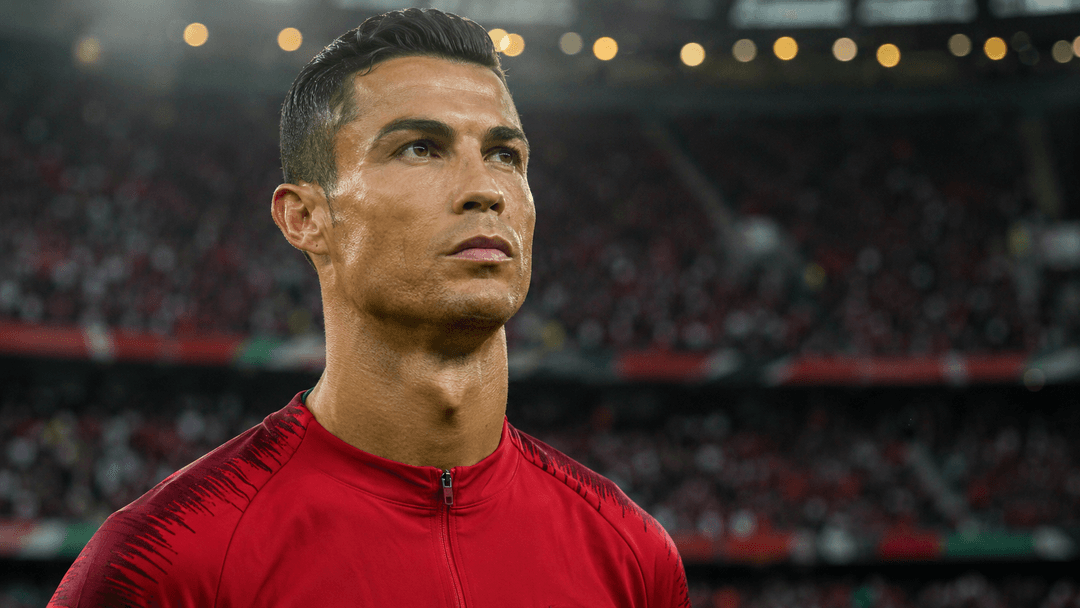
Cristiano Ronaldo’s final World Cup was always going to be one of the biggest stories of the tournament.
Portugal have arrived with a talented squad, but their opening draw against DR Congo showed that good players and long spells of possession are not enough on their own. Portugal had control, but not enough clear chances. Ronaldo had moments, but the team still looked like it was searching for the right balance in attack.
At the same time, Messi has already added even more attention to the tournament with a hat-trick. That does not change Ronaldo’s job directly, but it makes every Portugal match feel like part of a larger final chapter.
For Ronaldo, this World Cup is not only about scoring goals. It is about how he helps Portugal become sharper when the pressure rises.
The obvious challenge is goals.
Ronaldo has scored eight times at World Cups, but he has never finished as the top scorer of the tournament. At this stage, he is not chasing Miroslav Klose’s all-time record. He is much more likely to be competing for the Golden Boot of this specific World Cup.
Portugal’s group gives him opportunities. Colombia will be difficult, but DR Congo and Uzbekistan are the kind of opponents against whom Portugal should create plenty of attacks around the penalty area.
The question is whether Ronaldo can still turn those situations into goals consistently.
He does not need ten chances anymore. He needs the right two or three. His movement in the box, timing at crosses, and ability to arrive near rebounds still make him dangerous. But Portugal cannot rely on him to force every attack by himself.
What Portugal need from him:
Portugal’s biggest problem is not a lack of talent. It is that they can sometimes become too obvious near goal.
When every attack is trying to find Ronaldo, defenders can prepare for it. They can crowd the middle, cut off crosses, and force Portugal’s creative players into safer passes around the box.
Ronaldo can help solve this without necessarily scoring.
A run toward the near post can create space at the far post. Pulling a defender wide can open a lane for Bruno Fernandes or Bernardo Silva. A simple layoff can be more useful than a difficult shot from a bad angle.
This is where his role has changed. He can still be the main name in the attack, but Portugal will be more dangerous when he also helps create room for everyone else.
The best version of Portugal has:
A final World Cup creates a different kind of pressure.
Every missed chance becomes a headline. Every substitution becomes a debate. Every game feels like it could be one of the last major international matches of Ronaldo’s career.
That pressure can make a player rush.
It can lead to shooting too early, taking every free kick, ignoring a teammate in a better position, or trying to create a highlight instead of making the simple decision.
Portugal do not need Ronaldo to prove that he is still capable of spectacular moments. His career already proved that.
They need him to make the right choice when the game becomes tense.
That may mean shooting. It may also mean passing, creating a screen for a teammate, or slowing down a move for one second until a better option appears.
This may be the most important challenge of all.
Portugal have one of the strongest groups of attacking players in the tournament. Bruno Fernandes can create from midfield. Bernardo Silva can control difficult spaces. Rafael Leão can stretch a defence. Younger players can bring speed and energy around Ronaldo.
The team will be strongest when Ronaldo helps those players play freely instead of making them feel that every attack has to end with him.
That does not make him less important. It could make him more important.
The best captain is not always the player who scores the winner. Sometimes he is the player who makes the winner possible.
Ronaldo’s tournament is a useful example for young players because football changes with age.
When you are younger, you may rely more on pace, power, and instinct. Later, you need better timing, better positioning, and better decision-making. You need to see the game earlier and understand when to act — and when not to.
The key skills to watch during Portugal’s matches are:
Brain1 can be a small part of training those habits away from the pitch. Its short cognitive tasks challenge reaction, attention, memory, inhibition, and quick decisions. It is not a replacement for football training, but it can be a useful mental warm-up before training, matches, or even watching the World Cup, link to app platform.brain1.com
Ronaldo does not need to win every headline at this World Cup.
Portugal need him to help win matches.
If he scores, creates space, stays calm under pressure, and allows the rest of Portugal’s attack to play with freedom, his final World Cup can still become one of the strongest chapters of his international career.