

Mexico beat South Africa 2–0 in the opening match of the 2026 World Cup. Beyond the scoreline, the game showed how reaction, awareness, pressure, and quick decisions can change a match.
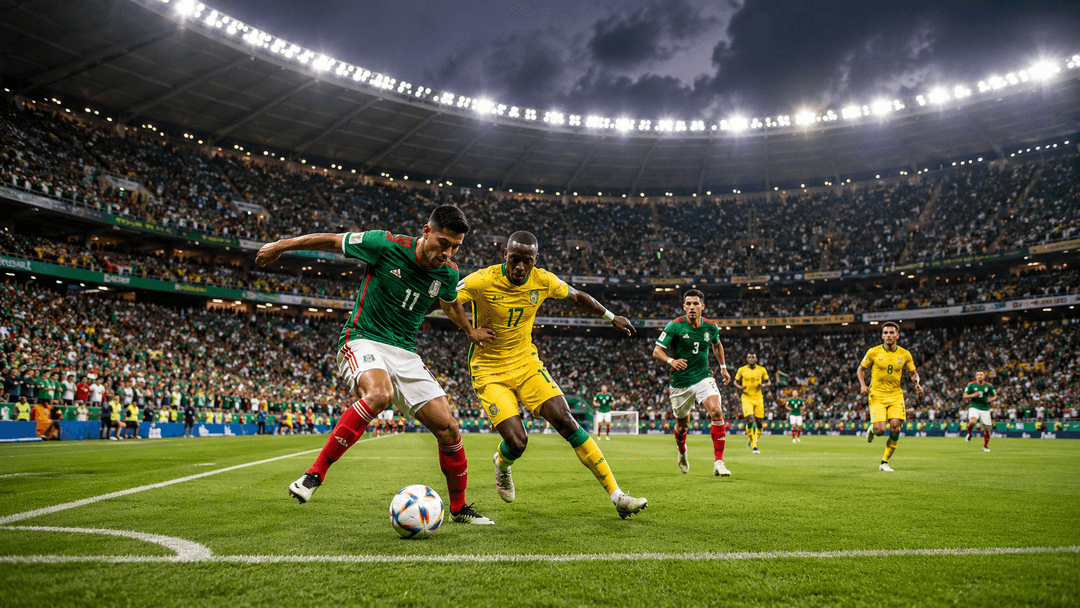
The first goal of a World Cup always feels bigger than one goal.
It becomes a signal. A release. A mistake punished. A player reacting half a second faster than everyone else.
That’s what happened when Mexico opened the 2026 World Cup with a 2–0 win over South Africa at the Estadio Azteca in Mexico City. The match had goals, pressure, VAR, three red cards, and the kind of early moment that shows why football is often decided before the shot is even taken.
Mexico scored in the 9th minute. South Africa made a mistake while trying to play out from the back. Eric Lira stepped in to intercept, the ball broke to Julián Quiñones, and the forward finished from the center of the box.
On paper, it was a defensive error and a quick finish.
In reality, it was also a lesson in reaction speed, anticipation, and attention.
South Africa’s mistake came from a bad touch after a pass from goalkeeper Ronwen Williams. Yaya Sithole couldn’t control the ball cleanly, and Mexico reacted immediately.
That kind of moment looks simple after it happens. A player miscontrols the ball. Another player intercepts. A striker scores.
But the important part is the half-second before the interception.
Lira had to read the pass. He had to notice the loose touch. He had to move before South Africa could recover. Quiñones then had to stay alert, adjust to the rebound, and finish quickly before the goalkeeper could close him down.
This is where speed in football is not only about sprinting.
It’s about seeing the situation early enough to act first.
Opening matches are strange.
Players are fresh, but the pressure is heavy. The stadium is loud. The tournament has just started. Every mistake feels visible.
In that environment, fast reactions matter because players don’t always have time to think through every decision. They rely on what they’ve already trained: scanning, reading body shape, noticing bad touches, reacting to open space, and making the next action quickly.
Mexico’s opening goal came from that kind of readiness.
They didn’t need a long passing move. They needed one player to recognize danger for South Africa and opportunity for Mexico.
A slow reaction gives the opponent time to clear the ball.
A fast reaction creates a goal.
The match shifted again early in the second half.
In the 49th minute, Sithole was sent off after bringing down Bryan Gutiérrez near the edge of the box as the Mexican player was moving toward a one-on-one chance.
That moment was about more than a foul. It was about a decision under pressure.
When a player is caught in a bad position, the brain has to choose quickly: recover, delay, let the goalkeeper handle it, or commit to a challenge. Under pressure, that decision can become rushed.
Sithole had already been involved in the mistake before Mexico’s first goal. By the second half, another difficult moment ended with South Africa down to ten men.
That’s one of football’s hardest mental tests: recovering after an earlier mistake while still making clear decisions later.
After the red card, Mexico didn’t need to chase the game. They had the lead and the extra player.
That can be harder than it sounds.
Teams sometimes become impatient when they have the advantage. They force shots, rush crosses, or lose structure because the game feels “almost won.”
Mexico’s second goal came in the 67th minute, when Raúl Jiménez headed in at the far post after a cross from Roberto Alvarado on the right side.
It was a different kind of goal from the first one.
The opener was about pressing and reacting to a mistake. The second was about timing, positioning, and attacking the right space.
Jiménez had to arrive in the right area. Alvarado had to deliver at the right moment. The far-post run had to be timed well enough to beat the defensive line.
Again, the finish was only the final visible action. The decision-making started earlier.
The match didn’t stay calm.
South Africa received a second red card in the 84th minute after VAR reviewed an incident involving Themba Zwane and Alvarado. Then Mexico also had a player sent off in stoppage time, when César Montes was shown red for a last-man foul.
Three red cards in an opening match tells you something about the emotional temperature of the game.
World Cup football is not only technical. It’s psychological. Players are dealing with fatigue, frustration, noise, urgency, and the feeling that every moment will be replayed everywhere.
That pressure affects decisions.
A late challenge. A reaction with the arm. A last-man foul. These are physical actions, but they often begin as mental overload: too much urgency, not enough control.
The best players are not only good at acting quickly. They’re also good at stopping themselves from making the wrong quick action.
That’s inhibition. In football terms, it means knowing when not to dive in, when not to react emotionally, and when to delay instead of forcing the challenge.
Mexico’s win can be explained by the obvious things: they scored early, handled the second half well, and took advantage after South Africa went down to ten men.
But there’s also a cognitive layer.
Footballers constantly process information:
These questions don’t happen as slow inner dialogue. In a match, they happen almost instantly.
That’s why cognitive ability matters in football. Reaction speed, visual attention, scanning, memory, inhibition, and decision-making are not separate from the game. They shape the game.
Mexico’s first goal came from seeing and reacting faster. South Africa’s red cards showed what happens when pressure turns decisions into mistakes. Jiménez’s header showed how timing and awareness still matter when a team is already in control.
The lesson from this match is not only “don’t make mistakes.”
Every player makes mistakes.
The better lesson is: train the moments around the mistake.
React quickly when the opponent has a bad touch. Scan before receiving. Stay calm after losing the ball. Don’t let one mistake turn into two. Keep your body under control when the match becomes emotional.
A player who reacts first has an advantage.
A player who stays calm after pressure has another one.
A player who can do both is hard to play against.
If you’re watching matches and want to feel the game differently, try paying attention to the seconds before the big moments.
Before a goal, look at who scans. Before a mistake, look at who is under pressure. Before a red card, look at whether the player has other options. Before a save, look at the goalkeeper’s starting position.
You can also make it active.
Brain1 gives players and fans short cognitive games that challenge things like reaction, attention, memory, inhibition, and quick decisions. It’s not a football match and it won’t replace training on the pitch, but it can be a useful way to check how sharp you feel before watching, playing, or analyzing a game.
Try one short session before a match, then watch the first 15 minutes and notice how many decisions happen before the ball reaches the player, link to the app: platform.brain1.com
Mexico’s 2–0 win over South Africa was a strong start for one of the host nations.
But the match was also a reminder that football turns quickly. One loose touch can become the first goal of a World Cup. One rushed challenge can change the shape of the game. One timed run can finish it.
The best teams don’t only play faster.
They notice faster.
They decide faster.
And when the pressure rises, they stay in control just long enough to make the better choice.