

France face Spain and England meet Argentina in the 2026 World Cup semi-finals. Here are the tactical battles, mental tests, and predictions that could shape the final.
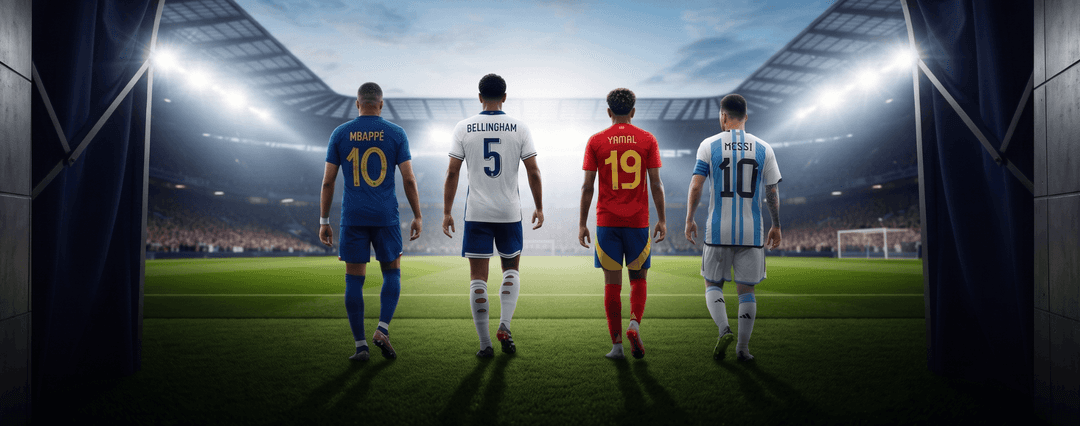
The 2026 World Cup has reached a final four that feels both familiar and difficult to predict. France, Spain, England and Argentina have all won the tournament before, all arrived with squads capable of lifting it again, and all reached the semi-finals through very different types of matches.
France were the most controlled quarter-final winner, beating Morocco 2–0 without allowing the match to become chaotic. Spain needed a late goal to defeat Belgium 2–1. England came from behind and required extra time against Norway, while Argentina also needed an additional 30 minutes to get past Switzerland.
That leaves two semi-finals with very different personalities. France against Spain is likely to be decided by space, possession and transition speed. England against Argentina carries more emotion, more history and a greater chance of becoming a match where pressure influences every decision.
Spain have survived two difficult knockout matches in a row. They eliminated Portugal with a stoppage-time goal and then edged Belgium 2–1 in the quarter-finals. Neither performance was completely dominant, but Spain showed an important tournament quality: they remained patient when the match stopped flowing in their favour.
Their greatest strength is still the way they control the ball and move opponents across the pitch. Pedri can change the rhythm from midfield, Lamine Yamal creates hesitation on the right, and Spain’s wide combinations often force defenders to make several decisions within a few seconds. The danger is that long periods of possession can become too predictable when the opponent refuses to press recklessly.
France are almost designed to punish that problem. They do not always need to dominate possession because they can move from defence to attack very quickly. Kylian Mbappé gives them a threat behind the defensive line, while their physical power in midfield allows them to recover the ball and attack before the opposition has reset.
The decisive questions are likely to be:
Spain may have more of the ball, but France could create the clearer chances. This match may come down to whether Spain’s possession produces enough real danger before France find their first major transition.
Spain should make the match close, but France look slightly better equipped for a semi-final where one turnover can completely change the game. Their ability to attack space quickly gives them an advantage against a team that will probably commit several players forward.
England against Argentina is the more emotionally loaded semi-final. The teams have shared some of the World Cup’s most famous and controversial moments, from England’s victory in 1966 to Diego Maradona’s goals in 1986, David Beckham’s red card in 1998, and Argentina’s elimination in 2002.
The players may describe it as another football match, but the atmosphere will not feel ordinary. England are chasing their first World Cup final since 1966, while Argentina are trying to defend the trophy they won in 2022. Both teams know that a defeat will immediately become part of the rivalry’s history.
England’s route to the semi-final has been built more on resilience than complete control. They came from behind against Norway and needed extra time to advance. Jude Bellingham has become central to their tournament, not only through goals but through his willingness to take responsibility when the match becomes difficult. Harry Kane remains the obvious finishing threat, while Bukayo Saka can give England a more direct route when possession becomes slow.
Argentina offer a different type of pressure. Lionel Messi may no longer dominate every minute physically, but he still changes the shape of the defence around him. Opponents step closer, midfielders hesitate to leave space, and that can create opportunities for Julián Álvarez, Lautaro Martínez and the runners around them.
The key battles should be:
England have shown they can survive difficult moments, but Argentina are more experienced at turning emotional matches into controlled ones. The longer the score remains level, the more the game may begin to suit Argentina.
England have enough power and quality to score, but Argentina may be better at managing the final stages of a tense match. Their experience, attacking variety and comfort in uncomfortable situations could be decisive if the game reaches extra time.
Semi-finals are often analysed through formations, but one individual action can make all of that preparation feel secondary. The four teams still standing have several players capable of changing a match with one decision.
The most important names to watch are:
The important part will not only be who scores. It will be who recognises the moment first: the midfielder who plays forward instead of sideways, the winger who attacks before the defence is balanced, or the defender who steps out before the pass reaches its target.
At this stage of a World Cup, most players are carrying fatigue, pressure and the awareness that one mistake could end the tournament. The physical differences between teams become smaller, while the value of attention and decision-making becomes greater.
A player may have only one second to decide whether to press or hold position. A midfielder may need to scan before receiving because there will be no time afterward. A striker may get one clean chance in the entire match. The ability to remain accurate while the game becomes emotionally faster can matter as much as technique.
Brain1 can be used as a short cognitive warm-up before training or competition, with tasks built around reaction, attention, inhibition and quick decision-making. It will not recreate the pressure of a World Cup semi-final, but it can help players practise the habits that appear before the decisive pass, run or finish.link to the app: platform.brain1.com
Based on the way the four teams have reached this stage, the most likely final looks like France vs Argentina. France have been the most balanced side in the knockout rounds, while Argentina appear comfortable in matches that demand patience, control and emotional discipline.
That final would also carry its own history after the extraordinary 2022 meeting between the teams. But neither Spain nor England should be treated as outsiders. Spain can control France if they avoid dangerous turnovers, and England have already shown that they can recover from difficult positions without losing belief.
The semi-finals may not be decided by the team that attacks most. They are more likely to be decided by the team that recognises the important moment first and stays calm enough to use it.